
Leading Treasury Through M&A

What would you do if treasury had to move $26.2 billion in cash in a single day? Every treasurer faces defining moments. Sometimes it’s an IPO. More often, it’s M&A. Deals that arrive fast, change everything, and immediately test banking readiness, cash visibility, and execution under pressure.
In this edition, we’re focusing on M&A — specifically, what it actually takes to execute well, drawn from real experience. We sat down with Jim Scurlock, CTP, Sr. Director Assistant Treasurer at Expedia Group, alongside George Zinn and Ed Barrie, to unpack lessons from more than 110 deals — including one of the largest cash acquisitions in history.
Also inside: Upcoming events, top treasury jobs open now, and more.
The Market Right Now
Global M&A volume exceeded $5 trillion in 2025, with confidence strengthening into year end. BCG’s M&A Sentiment Index reached 96 in December, signaling expectations for sustained deal activity across Europe and the Americas. Fewer deals are driving more value, with large, cash-intensive transactions accounting for most of the growth.
The IPO market is also reopening. Q3 2025 was the most active U.S. IPO quarter since 2021, and forecasts point to more large issuers preparing to go public in 2026.
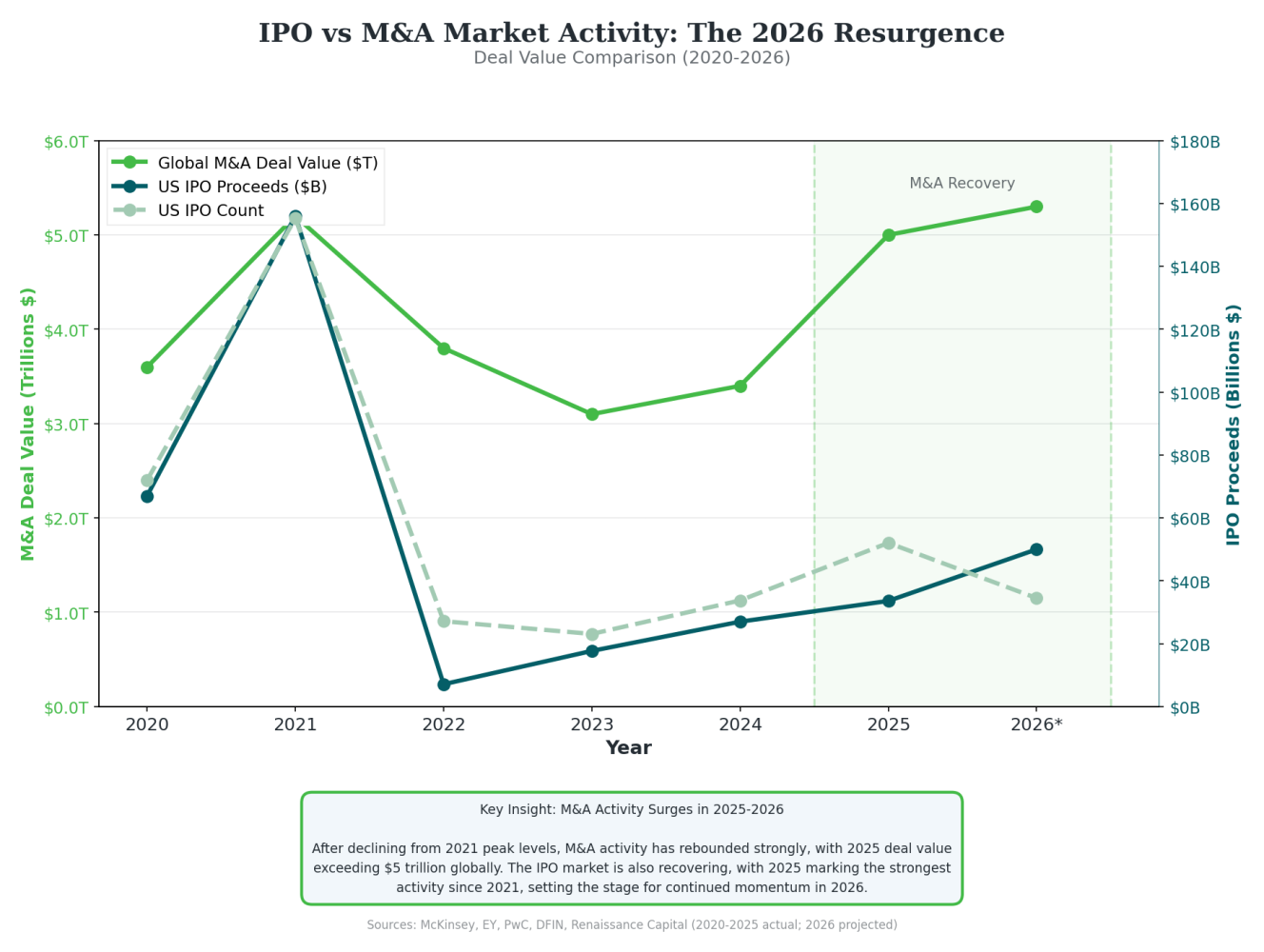
The data tells the same story treasurers are seeing on the ground. M&A is becoming more concentrated, more cash-intensive, and more operationally demanding. For treasurers, this is a call to lead earlier, prepare deeper, and execute with confidence when the deal hits.
Treasury Expert Spotlight
Leading Treasury Through M&A: From an All-Cash $26.2B Close to 110+ Deals
In the latest Expert Insights interview series, we spoke with Jim Scurlock, CTP, Senior Director, Assistant Treasurer at Expedia Group, joined by George Zinn and Ed Barrie of Treasury4.
Jim’s perspective is grounded in experience — having led treasury execution across more than 110 M&A transactions, including some of the most complex deals in modern tech. What follows reflects what consistently matters when treasury leads through M&A.
Banking Is Always Underestimated
Across deals large and small, one pressure point surfaced again and again.
“I think the function that gets typically underestimated the most is the banking integration.” — Jim Scurlock
KYC and AML reviews. Signer updates. SWIFT documentation. Online banking access. In some markets, replacing an account can take six to nine months. None of it moves on deal timelines.
George Zinn on the standard they held at Microsoft:
“Visibility and control of cash within 24 hours of close wasn’t aspirational. It was operational.” — George Zinn
Hitting that required doing the work before close — pre-filling documentation, coordinating with target banks, preparing signer updates so access could be flipped on day one. Miss that window and banks often restart diligence from scratch.
The nuance: “gun jumping” rules prevent operating a company before close, but with proper legal coordination, documentation can be prepared, reviewed, and staged — ready to execute the moment the deal closes.
The Day $26.2B Moved
In 2016, Microsoft’s all-cash acquisition of LinkedIn — $26.2 billion, its largest deal at the time — required funds to be available in the right legal entities, at the right banks, at the right moment. Not sourced from a single account. Cash flowed as securities matured, balances shifted across institutions, and treasury tracked every movement in real time.
“We were literally all in one room on the phone with the banks. You had maturities settling, wires being released, and intraday overdrafts moving between banks throughout the day. You were tracking the cash as it moved, making sure it landed in the right entities, at the right time.” — Jim Scurlock
The funding wasn’t sitting in accounts waiting — it was tied up in securities that had to mature at precisely the right moment. Treasury tracked every movement in real time as settlement windows opened.
“If the cash wasn’t in the right entities, you couldn’t use it.” — Jim Scurlock
Treasury execution was the determining factor. The transaction closed because the cash was where it needed to be, when it needed to be there.
The payoff: the day after close, Jim was able to show George the full global banking balances for every LinkedIn entity. That moment set the standard for every deal that followed.
No Two Deals Move at the Same Speed
At peak, Microsoft was closing roughly one acquisition every three weeks — and they weren’t sequential. Multiple deals running simultaneously, each at a different stage, each with its own banking footprint and FX exposure.
“Everybody’s going down the track at different speeds. Things are speeding up and slowing down with each individual one.” — Jim Scurlock
Managing that required a real operating model, not just good instincts.
Document everything, every time. Not just for the current deal — to build a playbook that gets sharper with each transaction. By the time a deal type had been done a dozen times, the playbook practically ran itself.
Communicate like there’s an economic consequence. Because there is. Wire teams, cash concentration, FX desks, tax, legal, corporate development — all have dependencies on treasury. Getting the right information to the right people fast wasn’t a courtesy.
“There’s a lot of individual teams that have a dependency on you. Making sure you’re properly communicating as fast as possible — because there’s an economic impact to all these items.” — Jim Scurlock
Build depth for the surge. Deal flow doesn’t arrive on a schedule. Jim recalled gaming studios closing four acquisitions in a single month after a major conference. The teams that handled it hadn’t just reacted — they’d built playbook depth during the quieter stretches.
Sweep cash immediately. George flagged something that looks routine but isn’t: ensuring acquired entities don’t sit above FDIC insurance thresholds at regional banks. The $250K limit became viscerally real during the Silicon Valley Bank collapse. For Microsoft, sweeping balances into controlled structures immediately wasn’t just hygiene.
“A lot of that sweeping immediately is really risk management that people don’t appreciate until the bad thing happens.” — George Zinn
What Nobody Tells You: The Surprises Inside Every Deal
No two deals are the same. The surprises are rarely the ones you planned for. We asked Jim and George to share their most memorable ones.
The accounts nobody disclosed. Across 110+ transactions, Jim has found 30–40 bank accounts that never surfaced in diligence — only discovered when treasury tied everything back to the general ledger. Undisclosed foreign accounts also carry regulatory exposure, including potential FBAR obligations for signatories.
The companies inside the companies. More than once, Jim’s team acquired a company — only to find that company had made its own acquisitions that no one at the table knew about.
“How would you not notice on your financials that your company has other companies you didn’t acquire?”
The lost chops. In parts of Asia, bank account authority isn’t a signature — it’s a physical chop, a stamped insignia required to transact. In one acquisition, the target company had lost theirs. No authority to access the accounts. No authority to close them. As George recalls, it never fully got resolved.
The safe. Just a couple of months ago — now at Expedia — Jim watched a team drill into a locked safe discovered during integration. Nobody knew what was in it.
“I felt like I was in the Bourne Identity.”
What’s the most surprising thing you’ve found inside a deal? Let us know in the comments.
It’s a Relationship Game, Start to Finish
The treasury teams that execute well aren’t just technically prepared — they’re trusted. By corporate development. By the target company. By their banks.
“Oftentimes, treasury teams don’t know about an acquisition until it’s really too late.”
Jim’s solution: consistent engagement with corporate development long before any deal was announced. Monthly pipeline reviews. Early presence in funds flow conversations. A seat at the table when escrow decisions were being made.
That trust extended to the target company too. Many acquired companies don’t have a treasury function — just one person juggling banking, payments, and compliance while wondering if their role will exist in six months.
“It’s a very emotional time. People don’t know what’s going to happen to their role or their company.” — Jim Scurlock
Treasury teams that show up as partners — not a control function taking over — get documentation signed faster, build trust sooner, and reduce friction at every stage. Some of the best people on George’s team over the years came directly from acquisitions. The approach made the difference.
Close Is the Beginning
Closing the deal is not the end of treasury’s work. Legal entity rationalization takes longer than any model assumes. Bank accounts stay open waiting on tax refunds, audits, local approvals. In many cases, the bank account is the last thing to close.
“Legal entity dissolutions take forever. I’ve never seen a timeline that’s been successfully met.” — Jim Scurlock
Across 110+ transactions, the mechanics stayed the same — banking timelines, entity structure, signer control, cash visibility. What changed was how costly it became to underestimate them.
Watch the full interview with Jim, George, and Ed below:
Treasury4 Tip
Entity4
In M&A, treasury problems rarely start with cash — they start with not knowing which entities exist, which ones matter, and where the bank accounts and signers actually sit. Entity4 centralizes entity structures, bank accounts, and signatory authority in one system of record. Clearer visibility pre-close, faster access on day one, fewer surprises post-close.
See How Entity4 WorksUpcoming Events
- March 2–3: EuroFinance Treasury & Cash Summit — Meet Treasury4
- March 17: Swift Virtual Masterclass | Earn 1.2 CTP Credits
- May 6–7, 2026: Treasury4 Client Retreat
Click here to see the full list of upcoming Treasury4 events.
🚨 Hot Treasury Roles Open Now
- Senior Director, Treasury | Prime Therapeutics | Remote, USA | Apply Here
- Treasury Manager | Ping Identity | Denver, CO | Apply Here
- VP, Cash Management | CIM Group | Los Angeles, CA | Apply Here
- Director, Assistant Treasurer | Illumina | Hybrid/San Diego, CA | Apply Here
- Global Head of Treasury | Omnissa | Remote, USA | Apply Here
- Senior Director, Payments Risk | GoFundMe | Remote, USA | Apply Here
- Senior Treasury Specialist | Hopper | Remote, USA and Canada | Apply Here
- Treasury Lead | Mercalis | Remote, USA | Apply Here
- Corporate Treasury Manager | Groma | Boston, MA | Apply Here
- Director of Treasury | Sunrider Insurance | Plano, TX | Apply Here
Are you in the middle of an acquisition right now, or preparing for one? What’s the biggest treasury challenge you’re navigating? Let us know in the comments.
Thanks for reading Inside Treasury4. Follow Treasury4 and subscribe for more real-world insights, product updates, and treasury industry news.